The PAS Lens for Family Enterprise
Seeing What Governance Cannot See
Governance explains how continuity is structured.
PAS reveals what determines whether continuity can actually be lived.
Beyond governance, every family enterprise is shaped by three forces:
- How people perceive what is happening.
- How they organise belonging.
- How safe they feel to change.
PAS helps people learn to read all three.
What
A systemic method integrating somatic, relational and neurobiological perspectives for experienced advisors, owners and family members working with continuity, succession and governance
Who
Experienced advisors, owners and family members involved in ownership, continuity and governance conversations
When
September 2026
How
3-month online cohort · 12 live sessions · 90 minutes weekly · Small group
Investment
€5,500
Admission
Selective · Now open
A Brief Orientation
What PAS is.
Who it is for.
How it works.
Governance helps structure continuity. PAS was developed for the moments when structure alone is no longer enough - when authority is questioned, belonging becomes uncertain, transitions stall, or families find themselves unable to live the governance they have carefully designed.
Designed for experienced advisors, owners and family members working with succession, ownership and continuity, PAS is a systemic method for perceiving what often remains invisible beneath governance conversations - patterns that many families and advisors recognise but struggle to name.
Drawing on systems thinking, somatic observation and neurobiological and relational sciences, PAS brings language to those patterns - shaping legitimacy, trust, succession and continuity long before they emerge as governance challenges.
PAS is not therapy or family counselling, nor does it replace governance. It is a systemic method for understanding the human conditions that allow governance, ownership and continuity to be lived.
Explore the Programme ↓The Scene
Consider what governance alone cannot explain.

The day before a funeral, four siblings were in a room together.
A family advisor was present.
Someone said something.
Afterwards, no one acknowledged having said it.
One person left the room.
No one followed.
The advisor said nothing.
The person who had spent more than two decades building, updating and sustaining the family's governance protocol stopped attending the meetings.
The protocol remained signed.
The structures remained in place.
The family still had governance.
But something had left the room that day - and never came back.
Most frameworks would look at this situation and see a communication problem. Or a governance gap. Or a facilitation failure.
PAS sees something else.
It sees a nervous system that did not feel safe enough to stay.
It sees a belonging pattern that had been under threat long before that day.
It sees a system that already knew - and could not yet say.
The Central Question
What does PAS help people see that governance alone cannot reveal?
Why PAS Exists

PAS was not developed from theory. It emerged at the intersection of two decades of work - one inside a family enterprise system, one inside somatic and attachment practice - and a growing recognition that the field of family enterprise continuity needed a lens that neither world had fully developed on its own.
Natalia Cacciari Garavito grew up in a multigenerational business family in Colombia, co-founded a venture within her family's agribusiness group, and has spent two decades observing the human dynamics that governance frameworks alone do not explain. PAS is the integration of both worlds.
PAS is grounded in systemic thinking - somatic, attachment and neurobiological perspectives applied not to understand individuals in isolation, but to understand how continuity is organised across the family system.
The PAS Family Enterprise Observatory is an independent research initiative exploring the human dynamics that determine whether continuity can be lived — not only designed. The Observatory continuously informs and refines the PAS Method through conversations with family owners, advisors, researchers and continuity practitioners.
What the Observatory keeps finding is this:
The families that struggle with continuity rarely lack governance. They lack the human conditions that allow governance to be lived.
What PAS Sees
Authority. Belonging. Trust. Identity. Attachment. Legacy.
These are not psychological concepts imported into family enterprise. They are phenomena that appear consistently in governance, succession and ownership conversations - and that no framework alone has the language to name.
Most frameworks focus on what is said and decided. PAS focuses on what shapes those conversations before they begin.
Invisible Mandates
The unspoken rules that direct decisions across generations - without ever having been named, agreed or examined.
Legitimacy Before Authority
Why some people are followed and others are merely obeyed - and what determines which one a leader becomes.
Readiness
Whether a family system is actually prepared for the conversation it is requesting - or whether it is requesting the conversation it can tolerate.
Systemic Exclusion
Who is no longer in the room. What information left with them. And what the system is protecting by keeping them out.
Founder Presence
The regulatory function a founder continues to hold in the system - long after formal authority has been transferred.
Relational Continuity
What a family can lose while preserving the enterprise. The difference between a business that survives and a family that remains connected.
Families rarely struggle because they lack solutions. They struggle because they cannot yet sustain them.
The Structure Is Known
For decades, family enterprise research has helped us understand the structural dimensions of continuity.
Family. Ownership. Enterprise. These models remain essential.
Reading the systems developmentally
Family Axis
Ownership Axis
Enterprise Axis
These models help explain how continuity evolves across family, ownership and enterprise systems.
What they do not explain is why the same patterns often persist across generations, across transitions and across governance structures.
Why succession remains stalled. Why authority is not transferred. Why governance is designed but not lived. Why the same conflicts return.
The structure is known. PAS helps explain why it is - or is not - lived.
How PAS Sees
PAS approaches family enterprise as a living system.
Its three lenses integrate somatic, relational and neurobiological perspectives to understand what shapes continuity beneath governance conversations.
PAS observes the individual as part of a system. A somatic reading alone can identify that someone is activated, withdrawn or frozen. PAS asks a different question: what function does that response serve within the system? What does it maintain? What does it protect? What equilibrium does it preserve?
The unit of observation is not the individual. It is the continuity system.
A systemic and psychodynamic perspective adds another layer: what the system cannot think, it begins to enact through its members. The symptom no longer belongs only to the individual. It may be expressing a tension within the system as a whole.
The method is organised around three lenses. Each draws on a distinct field of research and practice.
Presence
What the body of the system is communicating before anyone has spoken.
Before a family explains what is happening, the system is already showing it. PAS draws from Somatic Experiencing to help practitioners develop an embodied capacity for recognising tension, withdrawal, freeze and activation - and to ask what function those responses serve within the system as a whole.
The question is not what the family is saying. It is what the system is showing.
Love
Reading the relational dynamics of the family.
Belonging is not organised only by ownership. It is organised by loyalty, inherited roles and invisible relational patterns. PAS draws on Attachment Theory and Internal Family Systems to help practitioners recognise the inherited relational patterns, protective strategies and internal parts that shape loyalty, exclusion, triangulation and role.
The question is not who owns what. It is how belonging is being organised.
Safety
Reading the conditions that allow movement.
Many families know what needs to happen. Yet something prevents movement. PAS draws from Polyvagal Theory and co-regulation to recognise what a system needs before it can sustain change - and what the system may be protecting by remaining where it is.
The question is not what decision should be made. It is what this system needs in order to move.
The Observer as Instrument
PAS is not only about learning to read family enterprise systems. It is also about developing an embodied awareness of how your own nervous system, assumptions, loyalties and relational positioning shape what you are able to perceive.
In complex ownership systems, perception is never neutral.
How you interpret silence. How quickly you move to solve. Which family member you instinctively trust. How comfortable you are with authority. How your own body responds to conflict.
All of these influence what becomes visible - and what remains unseen.
Drawing on systemic practice, psychodynamic traditions and somatic intelligence - including Tavistock, ORSC and Somatic Experiencing - participants develop an embodied capacity for using their own responses as instruments of perception within the field.
Because in systemic work, the observer is always part of the field.

PAS does not replace governance. It helps explain why governance succeeds in some systems and struggles in others.
What PAS Adds
Family enterprise has developed sophisticated structural models. PAS does not replace them. It complements them.
Most family enterprise education develops the ability to work with governance, ownership, succession and continuity structures. PAS develops a complementary capacity: the ability to recognise the nervous system dynamics, relational patterns and conditions for safety shaping those conversations.
The programme assumes participants already bring expertise, experience or responsibility within family enterprise systems.
Most somatic approaches observe the individual. PAS observes the individual as part of a continuity system.
No previous training in somatic, attachment or neurobiological approaches is required. The programme develops these perspectives within the context where they will immediately be applied: family enterprise continuity.
PAS is not another governance programme. It is a systemic family enterprise programme that translates somatic, systemic, attachment and neurobiological perspectives into the realities of continuity, succession, governance and ownership.
PAS does not teach these disciplines as separate bodies of knowledge. They are introduced only insofar as they help participants understand family enterprise continuity — and immediately applied within that context.
Everything participants learn is translated into family enterprise practice.
Participant Reflections
"The session was intense, grounding and relieving all at the same time. What stayed with me most was becoming aware of where things were showing up in my body - and learning to read those sensations as information rather than automatically bypassing them. The shifts did not feel intellectual or performative. They felt physical, relational and very real."
 Alev Yakal Sahlan - Family Enterprise Advisor · Family Business Board Member · Operations Executive - Borochemie International - Türkiye
"Natalia holds space in a way I rarely encounter: completely neutral, without ever feeling distant. She is fully present - body and soul - and that is what allows conversations to open that would otherwise stay closed. In family enterprise work, that capacity is rare and consequential."
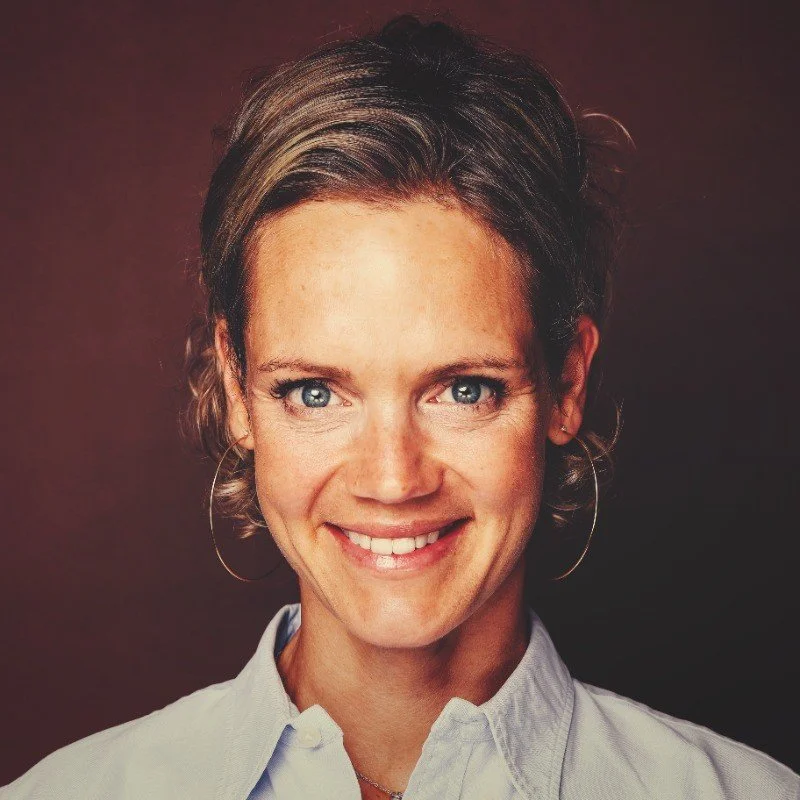 Kristina Schilling - MS Familienholding GmbH - Germany / Andorra
Where PAS Meets Family Enterprise
PAS becomes relevant at the moments where continuity becomes difficult to sustain.
Founder Transition
When authority needs to move but the system is not ready to release it.
Sibling Partnerships
When equality, contribution and recognition begin to diverge.
Cousin Systems
When belonging becomes more difficult to sustain than ownership.
Ownership Transitions
When shares can be transferred more easily than legitimacy.
Governance Conversations
When the structure exists, but the family struggles to live it.
Next Generation Integration
When participation cannot be created through information alone.
Conflict and Deadlock
When the visible disagreement is not the real issue.
Continuity Decisions
When what must be preserved is no longer obvious.
Three Moments Where PAS Becomes Most Relevant
Succession That Remains Stalled
The founder speaks calmly about succession. Yet each time the transition becomes concrete, the room tightens. A clear transition plan exists. The successor is capable. The timeline has been agreed. Publicly, the founder supports the transition. Privately, movement remains slow.
What else may be influencing the situation?
Questions of authority, legitimacy, identity and role transition may still be unresolved within the system.
What changes?
Instead of refining the plan again, the attention shifts to whether the system can actually sustain the transfer of authority.
Governance That Exists But Is Not Lived
The governance structure is respected in principle. Yet the real decisions continue to happen elsewhere. The family council meets. Agreements have been signed. Roles are defined. Still, influence continues to move through informal conversations, old alliances or unspoken hierarchies.
What else may be influencing the situation?
Formal authority may not yet carry the same legitimacy as the relational patterns that preceded it.
What changes?
Rather than reinforcing the structure, the attention shifts to the gap between designed authority and lived authority.
Conflict That Keeps Returning
A meeting ends with agreement. Yet nobody in the room seems fully convinced that anything has truly changed. One disagreement is resolved. Months later, another emerges with a similar emotional charge. The topic changes. The pattern remains.
What else may be influencing the situation?
The conflict may be expressing a recurring relational pattern rather than a discrete issue.
What changes?
Instead of treating each disagreement in isolation, the attention shifts to the pattern the system keeps repeating.
Inside a PAS Conversation

Often the first shift is not conceptual.
A jaw tightens — then releases.
Breath shortens during a succession conversation — then deepens.
Shoulders collapse when a sibling enters the room — then ground.
A voice that had disappeared returns.
Someone speaks and the room actually receives it.
The system begins reorganising from there.
A next-generation family member described feeling caught between loyalty to the family business and the need to step out of an operational role she could no longer sustain.
As we stayed with what was happening in the body, the conversation shifted. It became visible how much responsibility her system had learned to carry.
At one point she stood up, took a physical step back and instinctively raised her arms in front of her body - not aggressively, but as a boundary. Her breathing deepened. Her posture reorganised. She described feeling "more like a tree."
From that place, she found the words she had been unable to say to her family system for years:
It is your turn to do the work. I will no longer carry it for you.
Nothing changed in the governance structure.
Everything changed in her relationship to it.
Anonymised - Next-generation member of a family enterprise system
What Changes
Before PAS, people often find themselves refining governance structures that still fail to move. After PAS, they begin to recognise what is shaping the system's capacity to live those structures.
Before
You notice tension in a succession conversation.
After
You begin to recognise whether the system is approaching a threshold of activation, withdrawal or readiness.
Before
You see resistance to change.
After
You begin to recognise the loyalties, fears and protective strategies that make change feel dangerous.
Before
You focus on authority, roles and decision-making.
After
You begin to recognise the conditions that create legitimacy before authority is ever accepted.
Before
You see a family member disengage.
After
You begin to ask what belonging pattern the withdrawal may be protecting.
Before
You leave difficult conversations carrying tension without knowing what belongs to the family and what belongs to you.
After
You begin to distinguish your own responses from the system's signals, using both as valuable sources of information.
You ask: "What should happen next?"
You also ask: "What is this system showing?" "How is belonging being organised?" "What does this system need in order to move?"
PAS does not provide answers for every family. It develops the capacity to perceive what many continuity challenges are asking to be seen.
The families that struggle with continuity rarely lack governance. They lack the human conditions that allow governance to be lived.
Conversations from the PAS Family Enterprise Observatory
Across conversations with family members, advisors, researchers and continuity practitioners, similar observations keep emerging.
"Everyone knows it. Nobody talks about it."
"Many families think installing governance is the end of the journey. They do not realise it is the beginning of a process that never truly ends."
"It was all there in writing. But it became something to comply with. A protocol you could point to and say: we have one."
"Unconscious mandates are difficult to see because they confront people with who they actually are, not who they think they are."
"The family should be the first to know."
"Many times, the family is not ready for the process it believes it needs."
"The advisor does not open every door. But their presence can help the key appear."
These voices come from different countries, generations and professional backgrounds. Yet they point toward a similar reality:
The families that struggle with continuity rarely lack governance. More often, they struggle with the human conditions that allow governance to be lived.
Who Tends to Feel at Home Here
You will feel at home here if—
This programme was designed for experienced advisors, owners and family members who work with - or live inside - family enterprise systems at the level of continuity, succession and ownership, and who sense that governance alone does not fully explain what happens in the room.
You may be a family enterprise advisor, governance consultant, family office professional, next-generation family member, owner, facilitator or researcher. What matters is not your title. It is your proximity to the human realities of continuity.
You do not need a background in psychology, therapy or somatic practice. You do not need previous somatic training.
You do need: curiosity about what shapes continuity beyond structure, willingness to question assumptions, respect for the complexity of family enterprise life, and direct experience of family enterprise systems.
Not the right fit if—
This programme is not the right fit if you are looking for governance certification, succession methodology, family business fundamentals or a primarily theoretical programme.
PAS is designed to complement governance education, not replace it.
The founding cohort will be intentionally small - not to create exclusivity, but to preserve the depth of observation, case reflection and peer learning this work requires.
The people who seem most at home in PAS are often the ones who notice something important in the system before they can fully explain it.
The PAS Method
The architecture behind the method.
PAS is a systemic method for perceiving what shapes continuity in family enterprise.
Its unit of observation is not the individual. It is the continuity system.
Rather than using somatic, attachment and neurobiological perspectives to understand individuals in isolation, PAS applies them to understand how authority, belonging, legitimacy and continuity are organised across family enterprise systems.
PAS is organised around three lenses. Together, they help people recognise what shapes continuity beneath governance conversations.
Presence
what the system is showing
Learning to recognise what the system is showing before it becomes narrative.
Readiness, tension, activation, withdrawal, acceleration and freeze.
Love
how belonging is organised
Learning to recognise how belonging is organised.
Attachment patterns, inherited roles, invisible loyalties, exclusion and emotional ownership.
Safety
what allows movement
Learning to recognise what allows movement.
Neuroception, co-regulation, legitimacy, trust and the conditions that allow change without fragmentation.
The three lenses are applied where they matter most: founder transitions, sibling partnerships, cousin systems, ownership transitions, governance conversations, conflict and deadlock, next-generation integration, continuity decisions.
PAS is not a collection of tools. It is a way of perceiving family enterprise systems. The tools simply help make visible what the lenses reveal.
Not another cookie-cutter process.
The PAS Lens is cultivated from the inside out.

The PAS Family Enterprise Programme
The PAS Family Enterprise Programme
Founding Cohort · September 2026
The official developmental pathway through which participants cultivate the PAS Lens.
Learning to perceive differently requires more than understanding concepts. The PAS Lens is developed through observation, practice, reflection and application within real family enterprise contexts.
Before any logistics, it is worth understanding what the programme actually cultivates - because what changes is not what you know, but what you are able to perceive.
How the PAS Lens Is Developed
Participants cultivate the PAS Lens through observation, real family enterprise cases, guided reflection and repeated application across continuity conversations.
Each session moves between four modes of practice:
Seeing
Learning to recognise what the system is communicating before it becomes narrative.
Understanding
Connecting what is observed to systemic, somatic and relational patterns.
Applying
Exploring live family enterprise situations through the PAS lenses.
Integrating
Bringing the work back into participants' own advisory practice or family system.
Participants develop an embodied capacity for perceiving more accurately, intervening more precisely and remaining grounded inside complex ownership systems.
Throughout the programme, participants also develop a greater awareness of themselves as instruments within those systems.
Examples of Applied Practice
Participants work with real family enterprise situations through practices such as:
Live observation
Somatic mapping
Continuity mapping
Guided embodied observation
Reflective exercises
Family enterprise case work
The purpose is never the exercise itself. The purpose is to cultivate a more accurate way of perceiving continuity systems.
The Three-Month Structure
Month 1 — PresenceThe embodied foundations of continuity work
Learning to recognise what the system is showing before it becomes narrative.
- Biology of Family Leadership - reading nervous system states in real time
- Wealth Nervous System™ - how wealth shapes perception across generations
- Embodied Presence in Family Enterprise - staying grounded when authority, identity and succession collide
- Intergenerational Agency - recognising invisible loyalties limiting leadership readiness
Sessions
8 · 15 · 22 · 29 September
Month 2 — LoveThe relational inheritance that shapes continuity
Learning to recognise how belonging is organised - and what it costs to maintain it.
- Family Relational Mapping - invisible presences, exclusions and unresolved dynamics
- Invisible Loyalties and Emotional Inheritance - inherited roles and relational loyalties influencing decisions
- Triangles, System Stages and Sibling Roles - relational structures across ownership transitions
- Unspoken Dynamics and Invisible Forces - recognising what organises a system without being named
Sessions
7 · 13 · 20 · 27 October
Month 3 — SafetyThe conditions that allow governance and succession to be lived
Learning to recognise what a system needs before it can sustain change.
- Embodied Governance - the gap between designed authority and lived authority
- Neuro-Somatic Governance - why the same structure produces different results at different moments
- Embodied Succession - the biological threshold of authority transfer
- Vision to 100 Years - continuity, stewardship and legacy across generations
Sessions
4 · 10 · 17 · 24 November
What Participants Receive
- 12 live sessions with Natalia Cacciari Garavito
- Family enterprise case discussions - real situations explored through the PAS lens
- Applied observation exercises - learning to read the system in real time
- Implementation Labs - applying the PAS lenses within governance, ownership and succession conversations
- Peer learning - cross-disciplinary reflection with advisors, owners and continuity practitioners
- Between-session integration - structured observation bringing PAS into participants' existing contexts
- Final continuity synthesis - connecting PAS to each participant's advisory, ownership or leadership role
- Session recordings
- Access to the PAS Toolkit - a collection of practices and mapping tools designed to make visible the human dynamics beneath continuity conversations
By the end of the programme, participants do not simply understand the PAS Method. They begin to see through the PAS Lens.
What Participants Take With Them
After three months of observation, practice and application, participants leave with something that does not expire when the programme ends.
The PAS Lens for Family Enterprise - a systemic way of reading continuity, authority, belonging and readiness that becomes available in real situations, with real families, in real time.
A shared language for dynamics that previously had no name - invisible mandates, legitimacy before authority, readiness, systemic exclusion, founder presence, relational continuity.
Twelve applied observation frameworks - each connected to a specific moment in the life of a family enterprise system - that can be used independently or in combination across succession, governance, ownership and continuity conversations.
The capacity to distinguish structural problems from human-system problems - and to know which kind of intervention each requires.
A repeatable way of reading what a system is communicating before it becomes a governance challenge.
And the embodied capacity to remain grounded as an observer within complex ownership systems - without becoming absorbed into the patterns the system is trying to resolve.
These are not course materials. They are professional assets that change the quality of the work.
Intellectual Foundations
- Systemic Foundations
- Family Systems Thinking - Tavistock Institute - Barry Oshry - ORSC - ORSHY
- Somatic Foundations
- Somatic Experiencing®
- Relational Foundations
- Attachment Theory - Internal Family Systems
- Neurobiological Foundations
- Polyvagal Theory - Co-regulation Research
Family Enterprise Influences
FFI - FEA - INSEAD - KDVI - Family Enterprise Research
PAS is a systemic method for family enterprise that integrates somatic observation, relational dynamics and neurobiological principles to understand the human conditions shaping continuity beneath governance conversations.
Practical Information
- Format
- 12 sessions · 90 minutes weekly · 3 months · Small online cohort
- Schedule
- September - November 2026 · Tuesdays 14:30 CET · (7 Oct and 4 Nov: Wednesdays)
- Investment
- €5,500 · instalment option available · Selective admission
"One of the most sophisticated and differentiated programmes I have seen in this area."
A Different Way of Seeing
Family enterprise has spent decades refining governance.
The next frontier may not be another framework.
It may be a deeper capacity to perceive the human systems that determine whether governance can actually live.
PAS was created for experienced advisors, owners and family members who believe that continuity begins long before decisions are made.
It begins with what becomes visible.
And what becomes visible changes what becomes possible.
The future of family enterprise will belong to those who understand not only governance, but the living systems that determine whether governance can thrive.
Apply for September 2026
The founding cohort will be intentionally small.
Not to create exclusivity.
To preserve the depth of observation, reflection and dialogue this work requires.
The PAS Family Enterprise Programme
Founding Cohort - September 2026
A 12-session applied learning process for developing the capacity to see what governance alone cannot reveal.
Selective Admission
The programme is designed for experienced advisors, owners and family members working with continuity, succession and governance. Applications are reviewed to ensure professional fit, cohort composition and the depth of dialogue this programme is designed to support.
Applicants will receive a response within five working days.
Applications for the Founding Cohort are now open.
Your Investment Includes
- Twelve live learning sessions over three months.
- Real family enterprise cases explored through the PAS Lens.
- Guided practices that develop systemic perception in real time.
- The PAS Toolkit and all supporting learning materials.
- Session recordings for continued reflection and integration.
- A small cohort designed for meaningful dialogue and individual contribution.
- A learning journey immediately applicable to your own advisory or family enterprise context.
Everything in the programme is designed to be applied immediately to the continuity conversations you are already holding.
Investment
€5,500
September 2026 cohort
Small cohort
Instalment option available
Session Dates
8, 15, 22, 29 September
7, 13, 20, 27 October
4, 10, 17, 24 November